

By Dr Kavita Choudhari, MS (ENT), sleep apnea expert
In the grand tapestry of human existence, sleep often plays the role of a silent, unassuming protagonist. Yet, just like eating and drinking, it is an absolute fundamental need, the very bedrock upon which our overall health and well-being are built. Sleep is not merely a period of inactivity; it’s a powerhouse of restorative functions, diligently conserving our energy, repairing our cells, orchestrating vital hormone secretion (in harmony with the day and night), banishing tiredness, and allowing our bodies and minds to truly recover and rejuvenate.
Think of sleep as one pillar in a crucial triad of health, standing strong alongside exercise and nutrition. The insidious consequences of poor quality sleep can take a heavy toll over time. Neglecting our sleep needs significantly elevates the risk of developing debilitating conditions like anxiety, depression, hypertension, cardiovascular disease (CVD), and the growing concern of Type II diabetes. Beyond these serious health implications, poor sleep can have far-reaching effects on our daily lives, contributing to preventable work-related accidents, the alarming statistics of vehicular and road traffic accidents, increased absenteeism from work, and a greater reliance on hospital and GP visits. Alarmingly, sleep-related issues have surged into a global epidemic, casting a shadow over the health and quality of life for a staggering 45% of the world’s population.
Now, a crucial question likely simmers in your mind: how can we discern whether our sleep is a nightly revival or a source of detriment? The quality of our sleep hinges on several key elements: its duration, its continuity (that seamless, uninterrupted flow), and its depth. A simple yet reliable indicator of a truly good night’s sleep is waking up feeling refreshed, invigorated, and ready to embrace the day, with no lingering desire for more sleep and without the burden of a heavy head or headache.
If, however, your sleep consistently falls short, it’s a vital signal that warrants special attention. Identifying the specific sleep disorder you might be experiencing becomes paramount. A spectrum of sleep-related disorders exists, ranging from the frustrating grip of insomnia to the potentially serious Obstructive Sleep Apnea Syndrome (OSAS), the restless discomfort of restless leg syndrome, the unusual behaviours of parasomnia, and conditions like sleep talking, sleepwalking, and narcolepsy, among others. Notably, OSAS alone accounts for a staggering 40% of all these sleep disorders, underscoring its widespread prevalence.
Understanding the Threat: What Exactly is Obstructive Sleep Apnea Syndrome (OSAS)?
Picture this – your body momentarily forgets how to breathe. This is essentially what happens in obstructive sleep apnea (OSA). It is characterized by repeated episodes of breathing cessation lasting for more than 10 seconds, which disrupt the delicate balance of your body’s hemodynamics and can pave the way for chronic health disorders.
The most tell tale sign of OSA is often loud and persistent snoring. However, the symptoms extend beyond mere noise, encompassing excessive daytime sleepiness that can impact your alertness and productivity, the frightening experience of choking or gasping for air during sleep, difficulty concentrating, restless nights, and the unwelcome arrival of a headache each morning. Compelling recent research has illuminated the strong connection between OSA and a host of serious health conditions. Left unaddressed, OSA can trigger or worsen a growing number of health issues, including diabetes, hypertension, myocardial infarction (MI), stroke (cerebrovascular accident – CVA), and obesity.
The sheer scale of the problem is concerning, with OSAS affecting nearly 20% of the population. What’s even more alarming is that an estimated 90% of individuals with OSA remain undiagnosed, and less than 1% receive the necessary treatment, primarily due to a lack of awareness within the general population.
Taking the First Step: Screening for OSAS
Fortunately, identifying potential OSAS doesn’t always require an immediate trip to a specialist. the The STOP-BANG questionnaire below is a quick self-assessment tool to assess the risk of OSAS.
The STOP-BANG Questionnaire:
- Do you Snore loudly?
- Do you Feel Tired, sleepy, or fatigued throughout the entire day?
- Has anyone Observed you stop breathing (obstruction) during sleep?
- Do you have high blood Pressure?
- Is your BMI more than 35 kg/m²?
- Is your Age over 50 years?
- Is your Neck circumference more than 40 cm?
- Gender – Are you male?
Answering “Yes” to three or more of these questions indicates a high risk of OSAS and it is strongly recommended you visit an OSAS (sleep apnea) specialist for a sleep study. At this juncture, it’s essential to highlight that some individuals are simply snorers without experiencing any airway obstruction. The sleep study can effectively differentiate these cases. Simple snorers are managed very differently compared to those with obstructive symptoms
Charting the Path to Better Sleep: Treatment Options for OSAS
Broadly speaking, the management of OSA can be approached through either surgical, or non-surgical interventions.
Surgical treatment options encompass a range of procedures targeting different areas of the upper airway. Some examples of such nasal surgeries are septoplasties, turbinoplasties, and turbinectomies; endoscopic sinus surgeries to address nasal polyposis and tumors; various palatal surgeries such as palatoplasties and their modified techniques.
Non-surgical treatment options offer alternative strategies for managing OSA of which CPAP is a safe, effective, and a widely accepted therapy for OSA.
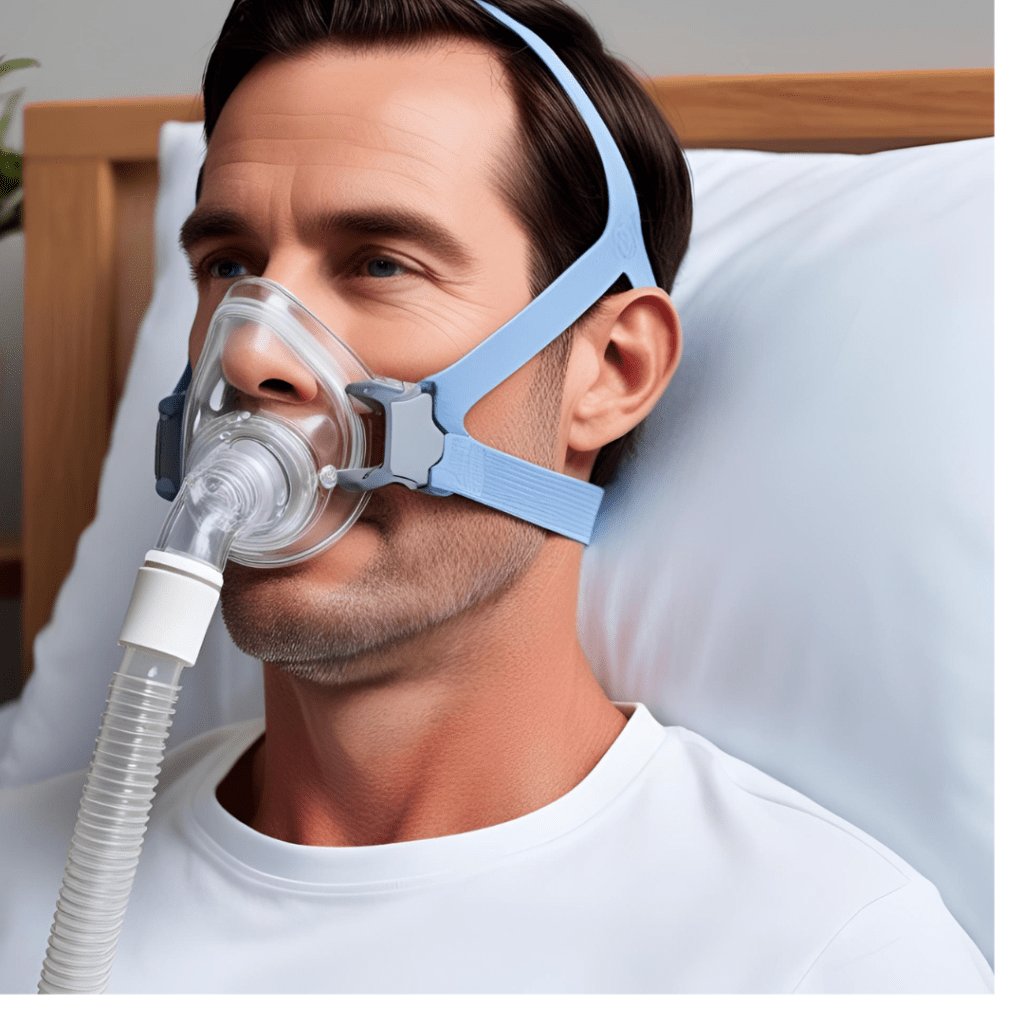
Patient using a CPAP machine
Ultimately, the decision on the most suitable treatment approach involves careful consideration of various factors, including the patient’s sleep study report, age, profession, any co-existing health conditions, personal preferences, and the expert opinion of the OSA specialist.
Sleep Hygiene: Best Practices for Restful Nights
Finally, adopting good sleep habits, collectively known as sleep hygiene, is crucial for everyone seeking a quality sleep experience. Here are some best practices to incorporate into your daily routine:
- Establish a consistent sleep schedule by going to bed and waking up at the same time every day, even on weekends.
- If you choose to nap, keep it brief, ideally no longer than 30 minutes.
- Avoid excessive consumption of alcohol and smoking, especially in the four hours leading up to bedtime.
- Limit caffeine intake in the six hours before you plan to sleep.
- Steer clear of heavy, sugary, and spicy meals in the four hours before bedtime.
- Engage in regular exercise, but avoid intense workouts close to your bedtime.
- Ensure your bedding is comfortable and supportive.
- Optimize your bedroom environment by setting a comfortable temperature and ensuring good ventilation.
- Minimize all distracting noises and make your bedroom as dark as possible.
By understanding the importance of sleep, recognizing the potential pitfalls of sleep disorders like OSAS, and embracing healthy sleep habits, we can all strive for more restful nights and, in turn, healthier and more fulfilling lives.
Sleep Tight.
 sandvita.com